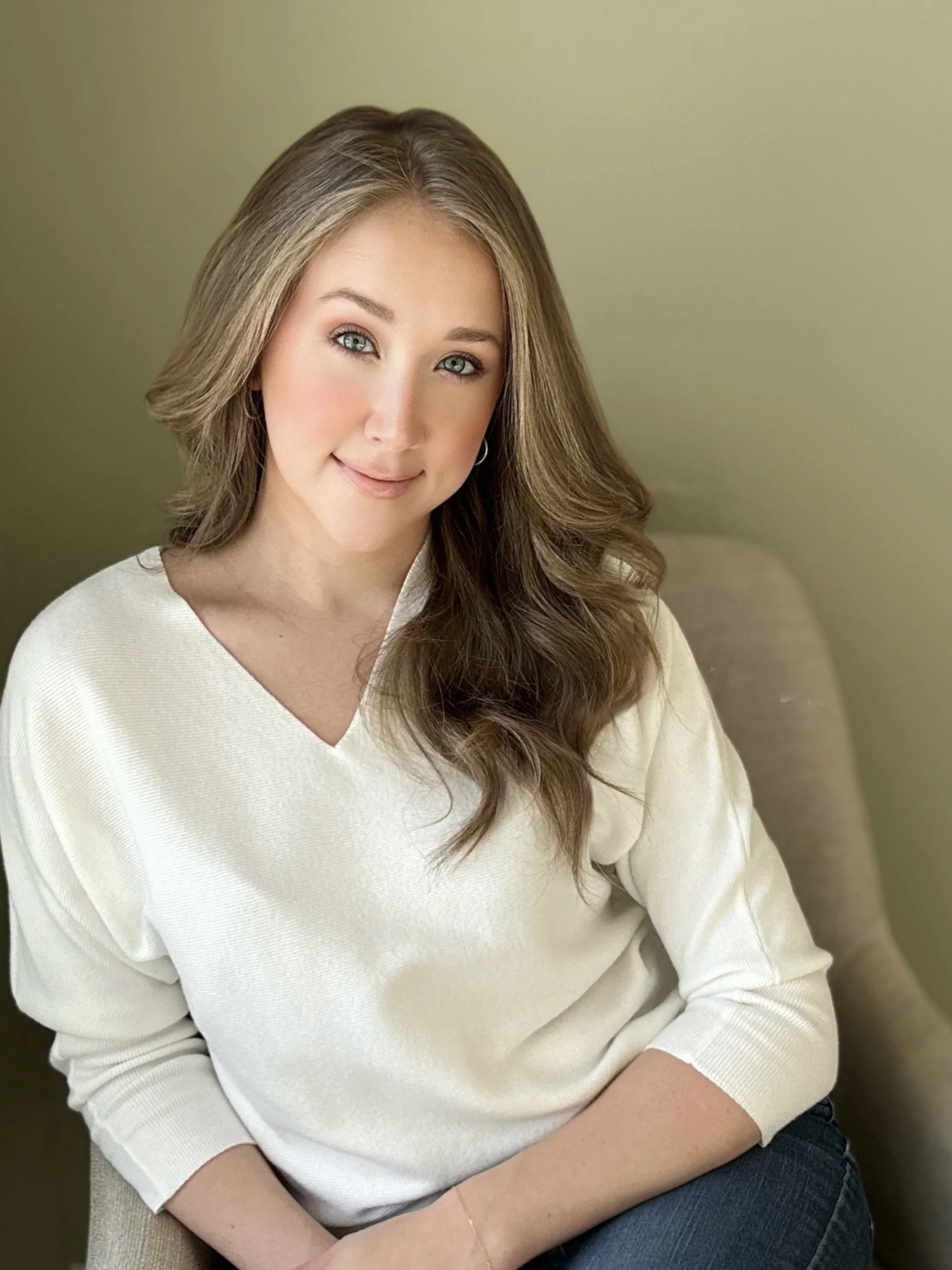
I’m Divorced and a Divorce Professional—Here’s What I Learned with Meg Priest
At Fresh Starts, we’re proud to spotlight the incredible professionals who guide people through one of life’s most challenging transitions: divorce. Today, we’re featuring Meg Priest, a Divorce Coach, whose work helps clients find clarity, strength, and a true fresh start.
Meg, what was your divorce journey like—what season of life you were in, the biggest challenge, and what supported you most?

Photo by Caitlin DiBlasi
People will share birth stories with strangers, but ask about their divorce and suddenly everyone goes quiet. It shouldn’t be that way.
My own story still feels surreal. We’d been married 13 years, raising four great kids, laughing, talking, grateful. We weren’t perfect, but we were steady. Or so I thought.
I was 50 when everything cracked open. My ex told me he “had to sleep with someone else to know if he still wanted to be married to me.” No discussion, just a declaration. He left the kids with me and said he planned to drain our 401K to fix up our rental so he’d have a place to live.
In that moment, I knew two things:
If he followed through, our marriage couldn’t survive, and—
If I didn’t protect my kids and our future, no one would.
So I filed. Not out of anger, but out of self-respect and necessity. Later I learned he didn’t actually want a divorce—he wanted to “test” our marriage. But the trust was already broken. If I stayed, I wouldn’t have recognized myself. And what lesson would that teach my kids about love and boundaries?
Everyone was shocked. I was shocked. But I never felt shame. I felt aligned with myself.
There are so many hard parts to divorce. But the hardest for me, without question, was losing time with my kids. Realizing that holidays, tuck-ins, thunderstorm snuggles—all of it was suddenly cut in half. It felt like something sacred had been stolen.
In the early dark days, what helped me most was knowing my worth. Knowing my kids were watching and that someday they’d understand I did something hard and did it with integrity. And my friends—they let me say the same things a hundred times until the pain had somewhere to go. I didn’t get pity; I got respect. That mattered.
I wish I'd had the tools I needed to guide me through the process. They didn’t exist. I needed to understand the steps, the timeline, the strategy. If I had known what I know now, I would have saved tens of thousands of dollars and a mountain of panic.
That gap—between what women need and what exists—is what led me here. I didn’t need a lawyer for most of it.
I needed a Divorce Organizer. I didn’t have one, so I became one.
What’s one thing your own divorce taught you that you couldn’t have learned otherwise? Looking back, what would you do differently in your divorce? What surprised you most about the divorce process?
My divorce taught me something I don’t think you can learn any other way: when life cracks open, your real self steps forward. I learned that my values aren’t theoretical — they’re lived. When my marriage ended, I didn’t crumble the way I always feared I might. I actually became more me. I learned that self-respect is a compass you can trust, even when everything else feels like a storm. And I learned that my kids watch how I move through hard things more than they listen to anything I say. That stayed with me.
Looking back, the one thing I’d do differently is get informed sooner. I walked into the legal process blind — like most people do — and I paid for it. Literally. I spent tens of thousands of dollars on administrative work that had nothing to do with legal strategy. If I had understood the actual lifecycle of divorce, what mattered and what didn’t, I would have handled things very differently. I would have been calmer, clearer, more organized, and less reactive. I also would have trusted myself sooner instead of waiting for permission from professionals who didn’t know my life nearly as well as I did.
What surprised me most about divorce was how little of it is about the law, and how much of it is about logistics, paperwork, timing, and emotional stamina. I thought divorce would feel like a dramatic courtroom moment. Instead, it felt like managing a huge, messy project while grieving a life I didn’t want to lose. And I was shocked by how few tools existed to help people navigate it. No roadmap, no checklist, no “here’s what comes next.” You’re just thrown into the deep end and expected to swim.
That gap — the total lack of structure and guidance — is what ultimately pushed me into the work I do now. I became the resource I desperately needed back then.
How does your personal divorce experience shape the way you work with clients now? Do you feel your divorce gave you a different kind of empathy for clients? How so?

Photo by Deb Grant
My divorce shapes everything about how I work with clients. I don’t come at this from theory — I come at it from the trenches. I know what it's like to be blindsided, have the life you built suddenly rearranged, make decisions while your heart is in your throat. I lived it, I anticipate my clients' needs before they need it.
It also changed how I support people. I’m not here to rush or overwhelm them with legal jargon. I’m here to slow everything down. Divorce feels chaotic, but it doesn’t have to be frantic. I learned that the hard way. My clients don’t have to. I provide structure, context, and the guidance that I never had. I show where the money leaks happen, where panic spikes, where people overspend because they don’t know the rules. I’m basically handing them the roadmap I wish someone had handed me.
As for empathy — mine is grounded and practical. I understand the grief, fear, and loneliness of having your life split apart while you’re still expected to function. But I also know that clarity returns, confidence rebuilds, and this process won't break you if you get the right support early.
What’s one piece of advice you’d give someone going through divorce right now?
If I could give one piece of advice to someone going through divorce right now, it would be this: slow down. Divorce feels like an emergency, but it’s not. You don’t have to make every decision today. You don’t have to solve the whole future this week. You have more time than your panic wants you to believe.
When you slow down, you think better. You protect your money, your energy, and your sanity. You make choices from clarity instead of fear. And you give yourself room to figure out what you want — not what your ex wants, not what your lawyer pushes, not what your anxiety is screaming.
I wish someone had told me that. I would’ve saved tens of thousands of dollars, a lot of sleepless nights, and so much unnecessary heartbreak. So that’s my advice: pause. Breathe. Gather information. Understand the process. And take it one small, steady step at a time.
You’re not behind. You’re not failing. You’re just rebuilding — and rebuilding takes time.
How do you encourage clients to see divorce not just as an ending, but as a fresh start?
I never try to force anyone to see divorce as a “fresh start” when they’re still in the middle of heartbreak. That’s not how real life works. Instead I help them get organized, informed, and steady, because clarity creates hope. When the chaos quiets, people can finally see what’s possible on the other side.
I remind clients that divorce is an ending. And endings hurt. But it’s also the dismantling of a life that wasn’t working. Once the dust settles, there's room for something better. I help them reconnect to themselves: their values, instincts, and vision for their future. When they feel more like themselves, the idea of a fresh start doesn’t feel like a slogan — it feels real.
And honestly, I’m proof. I didn’t want my marriage to end, but rebuilding forced me to step into a life that fits me better. My clients don’t need blind positivity; they need someone who’s been through it and can say, “You’re not lost — you’re transitioning. And this transition can lead somewhere good.” I show them structure, information, and self-trust. And somewhere along the way, they start to feel the fresh start for themselves.
What’s one misconception you had about divorce before experiencing it yourself?
Before I went through it myself, I thought divorce was mostly a legal event — something that happened in courtrooms with dramatic conversations and big, decisive moments. I assumed it would be about “the law” more than anything else.
That was wildly wrong.
What I learned is that divorce is mostly an administrative process wrapped around an emotional earthquake. It’s paperwork, deadlines, forms you’ve never heard of, financial statements you’re suddenly expected to understand, and a system that assumes you already know the rules when you absolutely do not. The legal part is tiny. The logistical part is enormous.
I also believed there would be guidance — that someone would walk me through what happens when, what’s important, what’s noise. Instead, it felt like being dropped into the middle of a maze without a map.
That misconception is exactly why I do the work I do now. Because once you know how the system actually works, it becomes a lot less terrifying — and a lot less expensive.
What’s one thing that people are often surprised to learn about you?
People are often surprised to learn that I didn’t always feel as strong as I may come across now. I didn’t walk into my divorce with a master plan or unshakable confidence. I was just a mom trying to protect her kids and her integrity while my life was falling apart in real time.
What surprises people is that I wasn’t born “resilient.” I built that muscle on the fly — while Googling legal terms I’d never heard of, while trying not to fall apart in front of my kids, while figuring out how to navigate a system that gives you zero instruction.
And maybe the other thing that surprises people is that I’m genuinely an optimist. I’m practical and organized, yes, but underneath that I really do believe people can rebuild a life that fits them better. I’m living proof of it.
So the thing people don’t always expect is that my strength wasn’t a starting point — it was something I had to earn, one hard decision at a time.
What does life look like for you now, after divorce?
It's hard to describe exactly what life looks like now — but it looks possible. That’s the word that keeps coming to me. I can see so many more paths than I ever could before. I try new things. I travel to places that never fit into my old life. I make my own traditions instead of inheriting ones that never felt right.
There’s no fear anymore. Not of starting over, not of failing, not of choosing the life I want. Failure isn’t a threat to me now, it’s just part of the process of getting somewhere better.
And my home… that’s been the biggest shift. There’s a peace in my house that didn’t exist before. I’m not sure what created it — maybe it’s the decluttering, maybe it’s the care I’ve put into it, or the way the garden blooms all summer — but people feel it the moment they walk in. My kids feel it. I feel it.
There’s this collective exhale when you step through the door. A sense of calm and safety, like the chaos stays outside. It’s the life I have now, and it fits.
What does “fresh start” mean to you personally?
A “fresh start” to me isn’t about wiping the slate clean or pretending nothing happened. It’s quieter than that. It’s the moment you realize you get to choose what your life looks like now — not out of crisis, not out of obligation, but out of clarity.
For me, a fresh start meant stepping out of a life that no longer fit and into one where I could finally hear myself again. It meant creating a home that feels peaceful, choosing traditions that feel authentic, and building a future that’s aligned with who I am now, not who I was trying to be in my marriage.
It also means possibility. The freedom to try, to fail, to change your mind, to grow in directions you couldn’t have imagined before. A fresh start isn’t loud or dramatic. It’s the steady return to yourself — and the realization that you’re allowed to build a life that feels good all the way through.
Thank you Meg for sharing your wisdom and experience with the Fresh Starts community! You can learn more about their work by checking out Meg’s profile below!

Please note that the blogpost above does not represent the thoughts or opinions of Fresh Start Registry and solely represents the original author’s perspective.