We've all been there. You stare at your to-do list, a Mount Everest of tasks mocking your ambition. You open a new browser tab (because, hey, research!), then get sucked into a black hole of cat videos (don't even pretend you haven't been there). But fear not, fellow warriors against procrastination! Today, we're diving into a secret weapon called body doubling, a productivity technique that's about to become your best friend.
So, what exactly is body doubling?
Imagine this: you're at a coffee shop, diligently tackling your work. But you're not alone! Seated across from you is a friend, quietly working on their own project. They're not there to chat or collaborate (although that can be an added bonus!), but simply to be a silent presence. This, my friend, is the essence of body doubling.
Why is having someone work alongside you so darn effective?
There's a surprising amount of science behind the magic of body doubling. Here are a few reasons why it can be your ticket to productivity paradise:
1. The Accountability Ally: Let's face it, we all struggle with internal pressure sometimes. But having another person (even a virtual one) working alongside you can add a layer of gentle accountability. It's like having a tiny productivity angel on your shoulder, whispering, "Hey, you got this!"
2. Bye-Bye Boredom Blues: Certain tasks can be mind-numbingly dull. But with a body double, the sheer presence of another focused human can make the time fly by. It's like studying for a test with a friend – suddenly, the dreaded material becomes a bit more bearable.
3. Focus Firewall: Distractions are the bane of a productive existence. But with a body double in the picture, you create a "focus firewall." Knowing someone else is working diligently can subconsciously nudge you to stay on track, minimizing the allure of that ever-present social media notification.
4. The Power of Shared Struggle: Sometimes, the act of simply knowing you're not alone in your struggle can be incredibly motivating. With a body double, you can share a silent "we're in this together" moment, creating a sense of camaraderie that fuels your determination to conquer your tasks.
5. The Mirror of Productivity: We all have those days where focus feels like a distant memory. But sometimes, seeing someone else working productively can be a powerful motivator. It's like having a live-action reflection of what you could be accomplishing, nudging you to step up your game.
Ready to give body doubling a try?
The good news is, it's incredibly easy to incorporate into your routine! Here are some tips:
Find your body double: This could be a friend, family member, or even a virtual buddy found on a body doubling platform.
Schedule your sessions: Decide on a specific time to work together and stick to it. Even short bursts of focused work with a body double can be incredibly effective.
Set expectations: Communicate with your body double about what you expect from the session. Do you want complete silence, or are occasional quick check-ins okay?
Embrace the flexibility: Body doubling can be done virtually or in person, whichever works best for you and your partner.
Remember, body doubling is all about creating a supportive environment that fosters focus and motivation. So, grab a friend, a cup of coffee (or tea, we don't discriminate!), and get ready to crush your to-do list with the power of shared productivity!
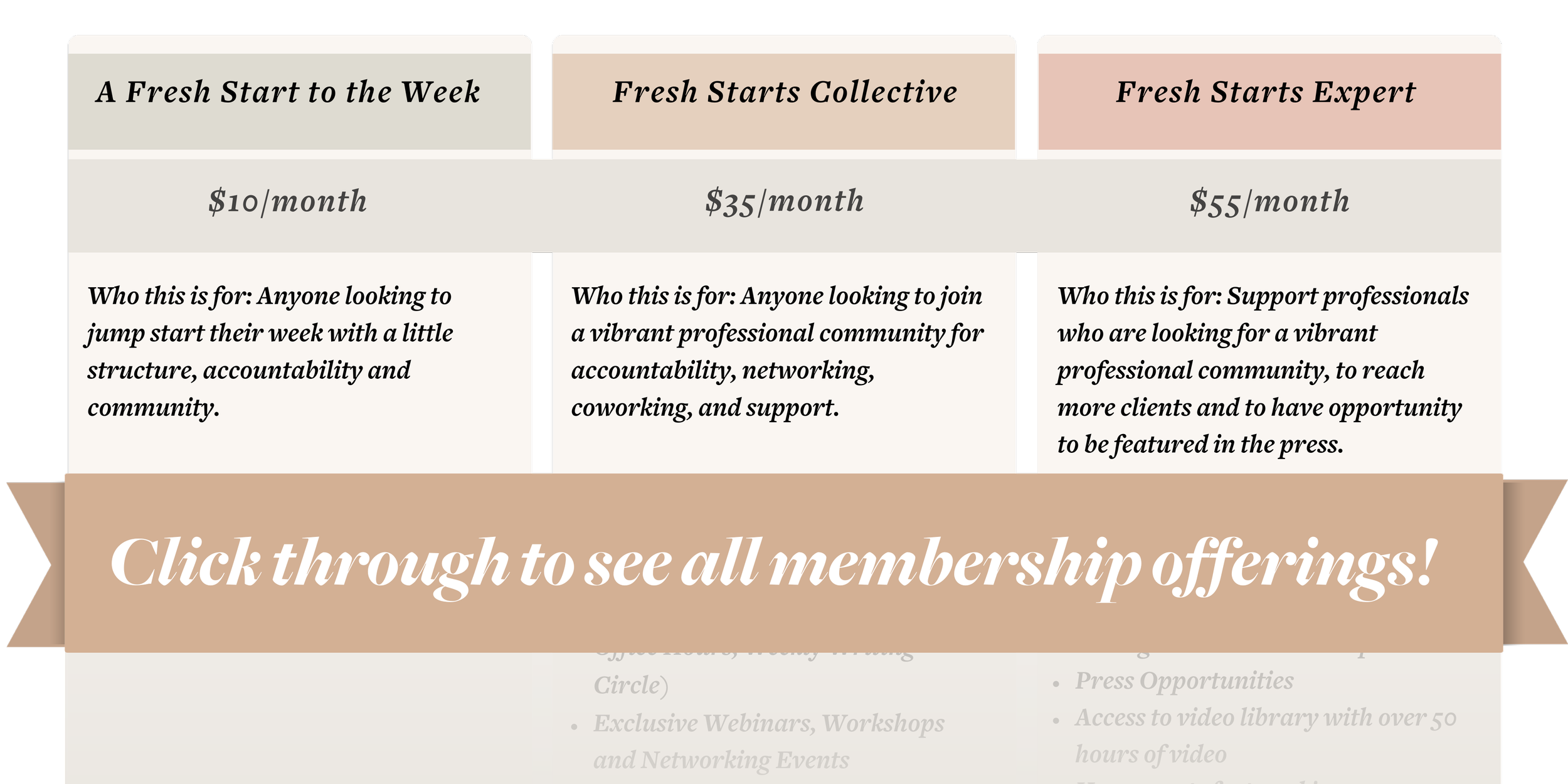
Did you know Fresh Starts offers three community levels? From Monday morning accountability to 6 sessions a week of coworking, hot seat coaching and…like, so much more. Check them out!

You got featured somewhere. Maybe it's a quote in an article, a full profile, a podcast mention, a TV segment. Amazing. Now what?

For the professionals in this field: why the standard marketing advice so often feels wrong here — and what tends to work instead.
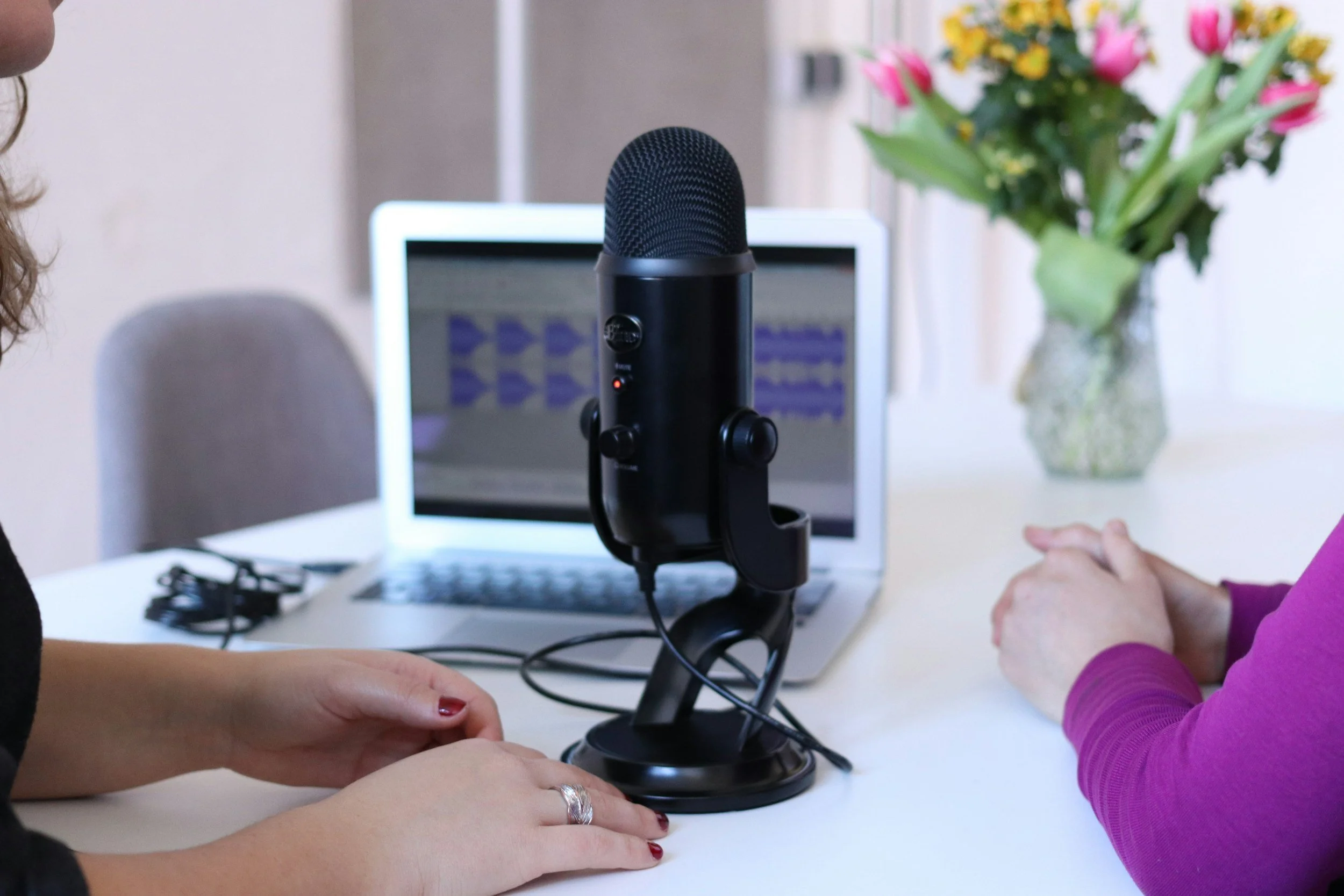
This is the final post in our Podcast Pitching Series — and we saved the best for last.
Because here's what most experts don't realize: a single podcast appearance isn't just an episode. It's a month's worth of content waiting to be unlocked.
You did the work. You had the conversation. You said brilliant things. Now let's make sure every single person in your world gets to hear them — not just the people who happened to find that episode.

Your clients are dealing with a lot, and much of it is out of their control. The way you communicate, schedule, and follow through is something you can control. Small adjustments here make a real difference to how supported people feel, and to whether they mention your name later.

You got the booking. Congratulations.
Now the real work begins — because showing up prepared is what separates the guests hosts remember from the guests they never invite back.
This week we're walking you through exactly how to prepare for a podcast interview so you show up confident, clear, and compelling every single time.

You wrote a great pitch. You found the right show. You sent it. Now what?
This is where most people either give up too soon or follow up in a way that gets them quietly ignored. This week we're covering the part of the process that happens after you hit send — and how to handle it in a way that gets responses without making anyone cringe.




Divorce doesn't stay at home. When an employee is going through one, it shows up at work: in missed days, in distraction, in questions about benefits, schedules, and money that they may not know who to ask. Most companies know this. Few have anything in place to help.

Over the past five posts, we've defined the three modes of a practice, worked out what each one looks like for you, looked at the signals that it's time to shift, walked through how to make each shift, and covered what to do when a shift happens without warning. This final post puts it all on a calendar.

Hibernate mode is for rest. But rest doesn't always mean doing nothing, and for many of us, a little light puttering is part of what makes a break feel restful. A quiet hour with a cup of tea and a messy folder can be oddly satisfying.

Knowing which mode your practice is in is half the work. The other half is knowing what to actually do once you're there.







Nothing opens a pitch quite like a number that stops someone cold. The Data Pitch leads with a surprising, counterintuitive, or little-known statistic — and uses it to position you as the expert who not only knows the numbers but knows what they mean and what to do about them.

Podcast hosts wake up every morning thinking about the same thing their audience is thinking about.
What's happening right now.
That's why one of the fastest ways to get a "yes" to a pitch is to tie your expertise directly to something timely — a news story, a cultural moment, a trending conversation, a new study, a law that just changed, a season of the year.

This week we're talking about the pitch angle that makes podcast hosts sit up straight.
The Hot Take.
A hot take is a clear, confident, slightly (or very) contrarian opinion about something in your field. It's the thing you believe that most of your colleagues won't say out loud. It's the conventional wisdom you disagree with. It's the advice everyone gives that you think is actually wrong.

We're talking about a third angle that is quietly one of the most powerful — especially if you're not yet comfortable putting your own story front and center. The Transformation Pitch.
Instead of leading with who you are or what you've been through, you lead with what you've helped someone else achieve. You let the result do the talking.

Here's the truth: podcast hosts get dozens of pitches from experts every week. Most of them sound exactly the same — impressive credentials, polished bios, bullet-pointed expertise. What cuts through all of that noise isn't another list of qualifications. It's a story they can't stop thinking about.
Your lived experience — the thing you went through, the moment everything changed, the reason you do this work — is not just a nice add-on to your pitch. For the right podcast, it IS the pitch.

Someone recently asked us how to structure an email when introducing two people to each other, and we thought it might be useful for everyone — it comes up more than you'd think, whether you're connecting a client with another expert in the community, looping in a colleague, or making a referral.
One of the most powerful things you can do right now to grow your visibility, build your authority, and reach people who genuinely need your expertise is to get yourself on podcasts as a guest expert.
And the good news? You don't need a publicist to make it happen. You just need a great pitch.

You are so empathetic — you believe your quiet is supporting them, but for those in the moment of divorce silence can feel scary. Here’s what to do.